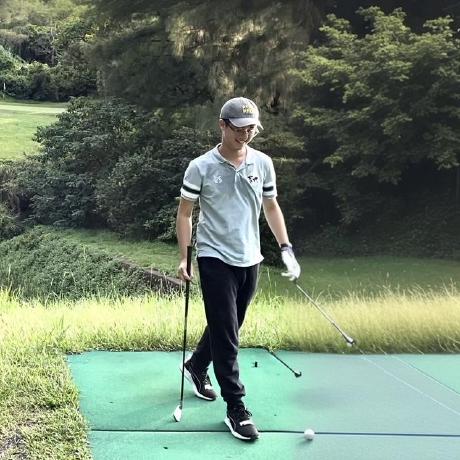
I am a senior undergraduate at National Chengchi University (NCCU),
double majoring in Management Information Systems and Computer Science.
My research focuses on trustworthy foundation models (LLMs and VLMs) for high-stakes applications such as
healthcare and autonomous driving, spanning hallucination, interpretability, and
verifiable model repair.
I currently work with Prof. Kuan-Hao Huang at Texas A&M University
on hallucination in vision-language models, and collaborate with
Prof. Liyue Shen's group at the University of Michigan
on active clinical diagnostic agents. I am also a research assistant at
Far Eastern Memorial Hospital,
where my system MedPlan (ACL 2025) is being piloted. At NCCU, I work with Prof. Fang Yu on verifiable repair of
language models and with Prof. Shi-Sheng Sun on explainable trajectory prediction.
I am applying to CS PhD programs for Fall 2027.
Research Highlights
Not Every Mention Is a Claim: Rethinking Object Hallucination Detection
Texas A&M FLAIR Lab · Under review at ARR ·
[paper]
[data]
Hallucination benchmarks treat every object a caption names as a claim that the object is present.
But in “a bench for people to sit on”, people is mentioned, not asserted.
I built NAME-Bench, 25,497 object mentions from five VLMs, labeled as concrete, hallucinated, or
non-assertive (depictive, purpose, negation, hedged). Every detector we tested flags non-assertive mentions as
hallucinations (14–80%), and correcting this is far harder on newer VLMs than on LLaVA-1.5.
MedAction: Active Multi-turn Clinical Diagnostic LLMs
University of Michigan BioMed-AI Lab · COLM 2026 ·
[paper]
[code/data]
Real diagnosis is a sequence of decisions: what to ask, which test to order, and when to stop.
I built a tree-structured distillation pipeline with two knowledge-graph-grounded consistency metrics to create
MedAction-32K (32,681 multi-turn diagnostic trajectories from 2,896 PMC cases). Our fine-tuned 8B model
is state of the art among open-source models on MedR-Bench. We then extended it with reinforcement learning into
MedAction-RL, an agent that orders tests, interprets results, and decides when to stop, raising 27B accuracy
from 0.46 to 0.77 on MedR-Bench.
[arXiv]
MedPlan: Personalized Medical Plan Generation in Clinical Practice
Far Eastern Memorial Hospital · ACL 2025 Industry Track ·
[paper]
[patent]
A two-stage retrieval-augmented system that mirrors how clinicians write SOAP notes: it first generates an assessment,
then a patient-specific treatment plan, grounded in the hospital's real-world EHR records. The system is being piloted at
the hospital and validated by attending physicians on real patient records (90%+ ICD-10 prediction accuracy), and led
to a Taiwan patent, the National Innovation Award,
and MOUs with clinics and HIS vendors. We are now integrating it with HL7 FHIR for interoperability with hospital
information systems.
WARP & FORGE: Verifiable Repair of Language Models
NCCU, with Prof. Fang Yu · NSTC Undergraduate Research Grant ·
[WARP paper]
[WARP code]
[FORGE paper]
[FORGE code]
Fine-tuning can fix a model's mistakes but offers no guarantee about what else it breaks.
WARP repairs inner layers of Transformer models by solving a convex quadratic program, with provable
guarantees on the repaired samples, preservation of correct behavior, and certified robustness.
FORGE extends this to generative LLMs, reducing bias and toxicity with minimal perplexity cost, and
stays stable in low-resource settings where fine-tuning fails.